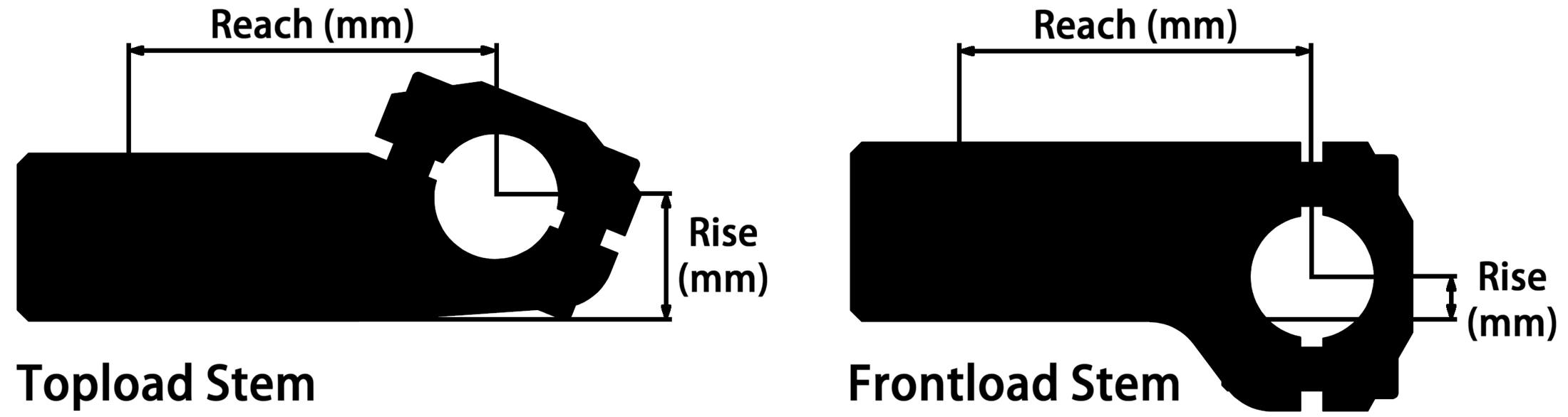
What size BMX stem do I need? BMX stem sizes are measured as shown below.
BMX Stem Types
BMX stems come in two types: frontload and topload. As the names suggest, frontload stems have the stem cap on the front of the stem, while topload stems have the stem cap on the top. The difference between the two is mostly visual, but frontload stems usually have a lower rise, whereas topload stems typically offer a higher rise.
BMX Stem Reach
The length of the stem is called the reach, measured from the center of the fork steerer tube to the center of the handlebars. A shorter reach gives the bike a more compact and responsive feel, which is popular for street riding and can help with tricks like barspins and nose manuals. Longer reach stems provide a more open and stable feel, which is favored in transition and trail riding. Riders may also choose a shorter or longer stem based on their height, regardless of riding style.
| Stem Reach |
Stem Feel |
Riding Style |
|---|---|---|
| 26mm - 45mm | Compact | Flatland / Kids |
| 46mm - 48mm | Short | Street / Technical |
| 49mm - 52mm | Standard | All Riding Styles |
| 53mm + | Long | Trails / Transition |
BMX Stem Rise
The effective height of the stem is called the rise, measured from the bottom of the stem to the center of the handlebars. Choosing a stem’s rise can be based on a rider’s height, or more often, simply on rider preference. A higher rise lifts the handlebars and provides a more upright riding position; however, this can also be achieved or adjusted with the height of the handlebars, headset cap, or spacers.
| Stem Rise |
Stem Feel |
Rider Feel |
|---|---|---|
| 0mm - 15mm | Lowest | Shorest |
| 15mm - 20mm | Low | Short |
| 20mm - 25mm | Mid | Average |
| 25mm - 30mm | High | Tall |
| 30mm - 35mm | Highest | Tallest |
Tips
Another dimension you may see referred to is stack height. This refers to the height or thickness of the stem body. Stack height doesn’t affect the feel of the stem, it only determines how much of the fork steerer tube is occupied by the stem. In most cases, you won’t need to worry about stack height.
Reach is typically considered the more important dimension, since rise can be adjusted using the headset cap and spacers, or by changing the height of the handlebars.
Some stems can also be flipped upside down (inverted), which changes the stem’s rise.
Are we missing something? Think something is wrong? Contact us here!